
From Feedback to Action: How AI Is Transforming Patient Experience at the Unit Level
Every year, hospitals collect thousands of patient comments. Patients describe their nights in their own words — the noise outside their door at 2 a.m., the state of their linens, the temperature of the room, the feeling of being heard or overlooked. It's rich, honest feedback. And for most healthcare organizations, the vast majority of it goes unread.
Not because anyone wants to ignore it. But because free-text is hard to work with at scale.
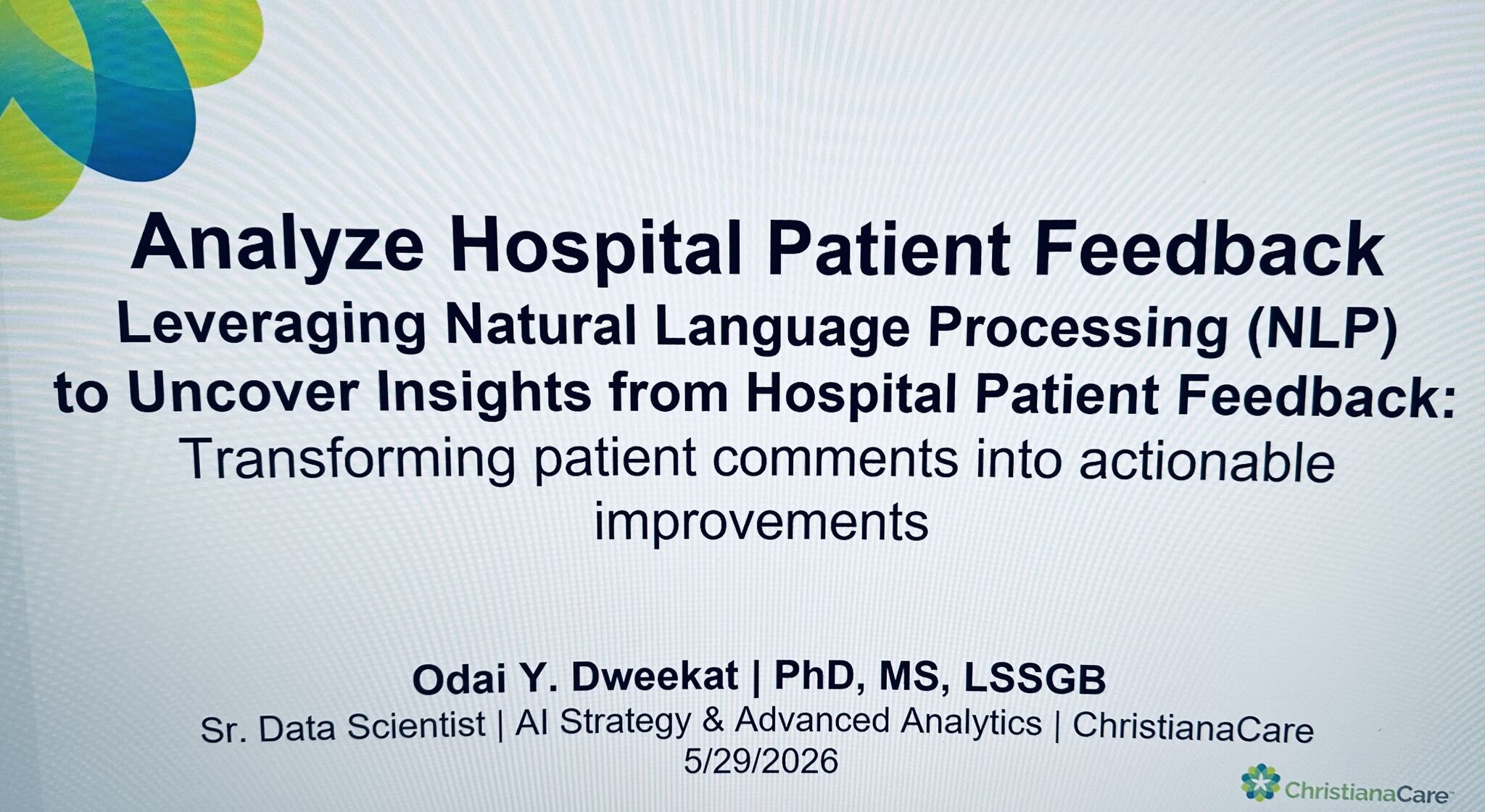
In a recent session, the DAHQ team shared how we tackled this problem head-on — using AI and natural language processing (NLP) to turn thousands of unstructured patient comments into clear, actionable insights that are already improving care.
The Problem with Unstructured Feedback
Patient satisfaction surveys often end with open-ended questions. The responses are candid and detailed in ways that structured rating scales simply aren't. But they're also messy, inconsistent, and impossible to analyze manually when you're dealing with thousands of comments across dozens of units.
The result is a familiar pattern: feedback gets collected, reports get generated, and the comments section quietly gets ignored. Decisions get made on instinct, benchmarks, or expensive external consultants — rather than on what patients are actually saying.
We wanted to change that.
Building an End-to-End Analytics Framework
Our approach combined text preprocessing, sentiment analysis, and rule-based classification into a pipeline that could process large volumes of feedback consistently and quickly.
Comments were automatically organized into meaningful themes — sleep quality, cleanliness, noise, comfort, linen quality, temperature control — and tagged with sentiment signals. The unstructured narrative became structured data.
That shift matters more than it might sound. Once feedback is structured, you can do things with it:
Identify the specific drivers behind low satisfaction scores
Pinpoint problems at the campus level, the unit level, even the shift level
Track whether interventions are actually working over time
Spot emerging issues before they show up in quarterly reports
The framework was designed to scale, and it did — expanding from its initial focus areas to cover additional domains as the team's confidence in the approach grew.
From Intuition to Evidence
The operational impact has been real. Patient experience scores have improved. Targeted interventions-the kind that address specific problems in specific places-have replaced the generic, one-size-fits-all responses that tend to follow aggregate survey data. Cleanliness as a Case Study in Action One example is room cleanliness.
By translating patient comments into structured insights, we identified key drivers of dissatisfaction and implemented targeted interventions-including patient-facing communication (pyramid cards), an environmental services reward program, and a cubicle curtain initiative.
The impact was measurable: HCAHPS room cleanliness scores increased from 58.5 to 61.3 in FY25 to date, demonstrating how AI-driven insights can turn patient voice into real operational improvement. Perhaps just as importantly, the organization has reduced its reliance on external consulting support. When you can generate granular, reliable insight internally, you're less dependent on outside interpretation.
The Bigger Principle
The technical implementation matters, but the session closed with a point worth emphasizing: AI is most effective when it's applied to a clearly defined operational problem.
The technology didn't drive this project. The problem did. We knew what we were trying to solve — underutilized patient feedback, decisions made without evidence, a disconnect between what patients experienced and what leadership knew — and we built a tool to address it.
That's the right order of operations. And it's why the results were measurable rather than theoretical.
Interested in how DAHQ is applying analytics to improve patient experience and operational decision-making? Reach out to learn more about our approach.